When evaluating premium real estate, square footage and spatial scale dominate the conversation. Yet, the physical dimensions of a room are only half the story. The true perception of a space—whether it feels tight and restrictive or grand and expansive—is dictated by the invisible architecture of lighting.
Relying on inadequate or improperly placed fixtures can visually compress even a large room, creating harsh shadows that box an environment in. Conversely, a highly calibrated lighting strategy can break boundaries, dissolve dark corners, and create the illusion of an open, airy sanctuary.
For property owners aiming to maximize luxury appeal and optimize market equity, mastering the mechanics of light is a high-ROI necessity. Here is the design blueprint for selecting and positioning lighting to make your rooms feel significantly larger.
1. Implement Layered Lighting to Eradicate Flatness
The most common mistake in standard interior design is relying on a single, centralized overhead fixture. A singular light source forces illumination downward into a central pool, casting dark shadows into corners and along perimeter walls. This one-dimensional effect emphasizes the room’s boundaries, making the walls feel as though they are closing in.
-
The Strategy: Build a three-tier lighting ecosystem consisting of ambient, task, and accent layers.
-
The Implementation:
-
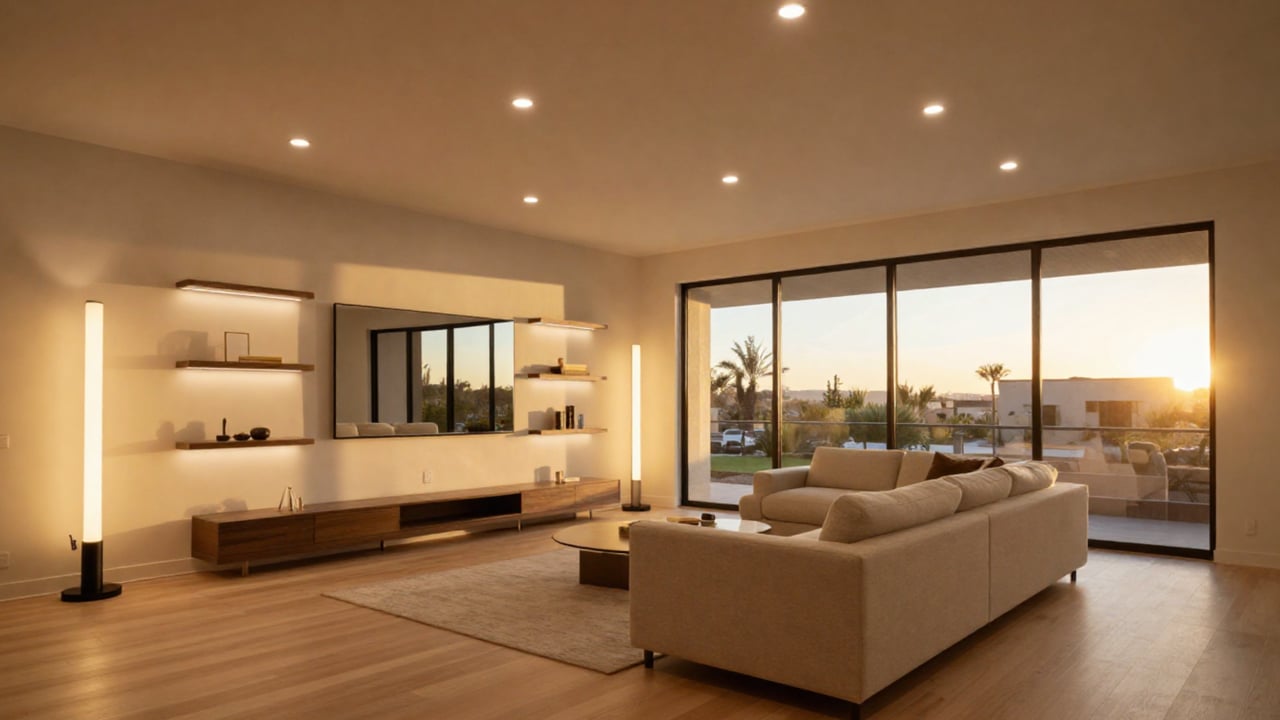
Ambient: Utilize sleek recessed lighting or flush-mounts to establish an even, glare-free baseline of illumination across the ceiling.
-
Task: Introduce directional lighting—such as under-cabinet LEDs in kitchens or slim reading lamps in seating nooks—to define functional zones without physical partitions.
-
Accent: Deploy low-profile track lighting or spotlights to highlight architectural features, millwork, or fine art.
-
-
The Spatial Return: Layering lights creates distinct planes of depth and dimension. By bouncing light across different levels and surface materials, you keep the eye moving, which naturally tricks the brain into perceiving a much larger room.
2. Leverage Verticality with Uplighting and Elongated Pendants
To expand a tight footprint, you must shift the visual narrative from horizontal constraints to vertical capacity. Drawing the eye upward emphasizes ceiling height and introduces a grander, volumetric feel to the living space.
-
The Strategy: Utilize vertical lighting fixtures and upward-facing light dispersion.
-
The Implementation: Install wall sconces or floor lamps that cast illumination explicitly upward toward the ceiling line. This "uplighting" technique effectively washes the upper boundaries of the room in soft light, visually lifting a low ceiling. Additionally, consider hanging an elongated, slim pendant light over a dining surface or accent table.
-
The Spatial Return: Long, vertical fixtures act as clean architectural sightlines that draw attention to high ceilings, emphasizing the room's total cubic volume rather than its limited floor space.
3. Choose Minimalist, Translucent, and High-Reflective Fixtures
The physical hardware of your light fixtures can act as visual roadblocks if chosen incorrectly. Bulky, ornate, or opaque chandeliers drop down into a room's sightlines, breaking up the flow of the space and exacerbating a cramped layout.
-
The Strategy: Prioritize clean, low-profile fixtures and transparent materials that maximize light distribution.
-
The Implementation: Opt for recessed "can" lights or minimalist track systems that sit flush against or inside the ceiling plane to preserve precious physical headroom. When standalone lamps or pendants are necessary, specify fixtures crafted from clear glass, polished chrome, or slender, spindly metals.
-
The Spatial Return: Glass and polished metallic finishes bounce ambient light effortlessly across the room. Because transparent or ultra-slim fixtures can be seen through, they allow sightlines to remain completely open and uninterrupted, fostering a sense of continuous space.
4. Dispel the Perimeters: Corner and Recess Illumination
Shadows are the ultimate enemy of spatial expansion. Pockets of darkness along walls and in corners hide real estate, visually shrinking a room's usable boundaries by clipping out sections from our field of view.
-
The Strategy: Intentionally illuminate structural recesses and the far corners of the property.
-
The Implementation: Place slim floor lamps, directional spotlights, or low-voltage LED strip lights into tight alcoves, corners, or architectural niches. For areas lacking direct wall outlets, utilize high-end rechargeable cordless LED fixtures to seamlessly brighten hard-to-reach niches.
-
The Spatial Return: Flooding the exact boundaries and deep recesses of a room with light eliminates contrasting shadows. By pushing light into the furthest edges, you stretch the visual frame of the room out to its maximum capacity.
5. Seamlessly Integrate Lighting and High-Reflective Geometry
The relationship between your lighting placement and the room's structural geometry can be leveraged to create a profound illusion of endless depth.
-
The Strategy: Pair strategic artificial light sources with oversized, high-quality mirrors.
-
The Implementation: Position a substantial floor or wall mirror directly opposite a main light source—such as a pair of elegant wall sconces or a bright window.
-
The Spatial Return: Mirrors are the most efficient tools for duplicating ambient illumination. By bouncing the light rays straight back into the heart of the home, a mirror amplifies the brightness of the room, opens up closed sightlines, and visually doubles the perceived depth of the living area.
Engineering an Elite Sanctuary
In the luxury asset landscape, light is more than just a functional utility—it is a powerful tool used to re-engineer spatial architecture. By thoughtfully removing harsh shadows, creating vertical depth, and layering your light sources, you can transform a modest, cozy room into an expansive, light-filled haven.
Is your home’s architecture performing to its absolute potential? Take a look at your corners tonight, eliminate the shadows, and unlock the true scale of your sanctuary. 🥂⚓