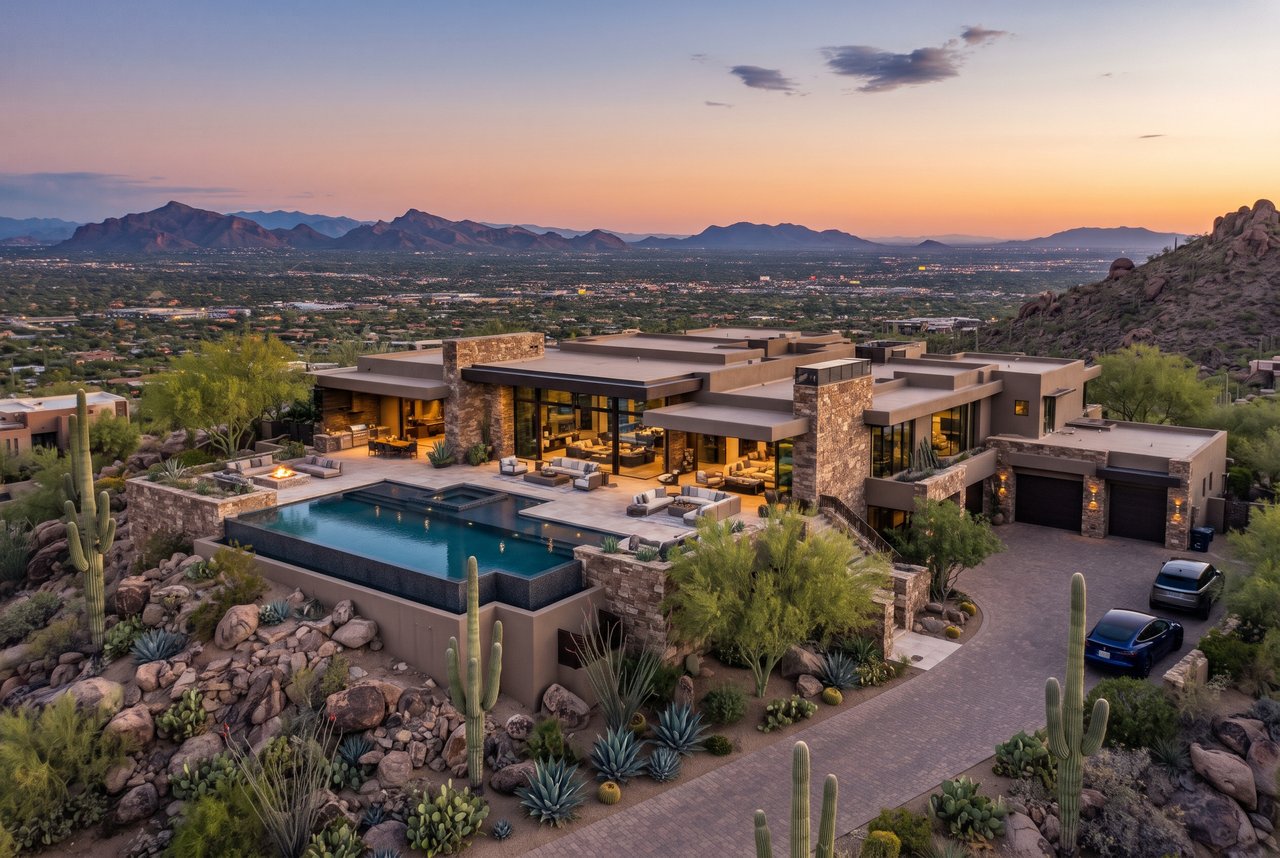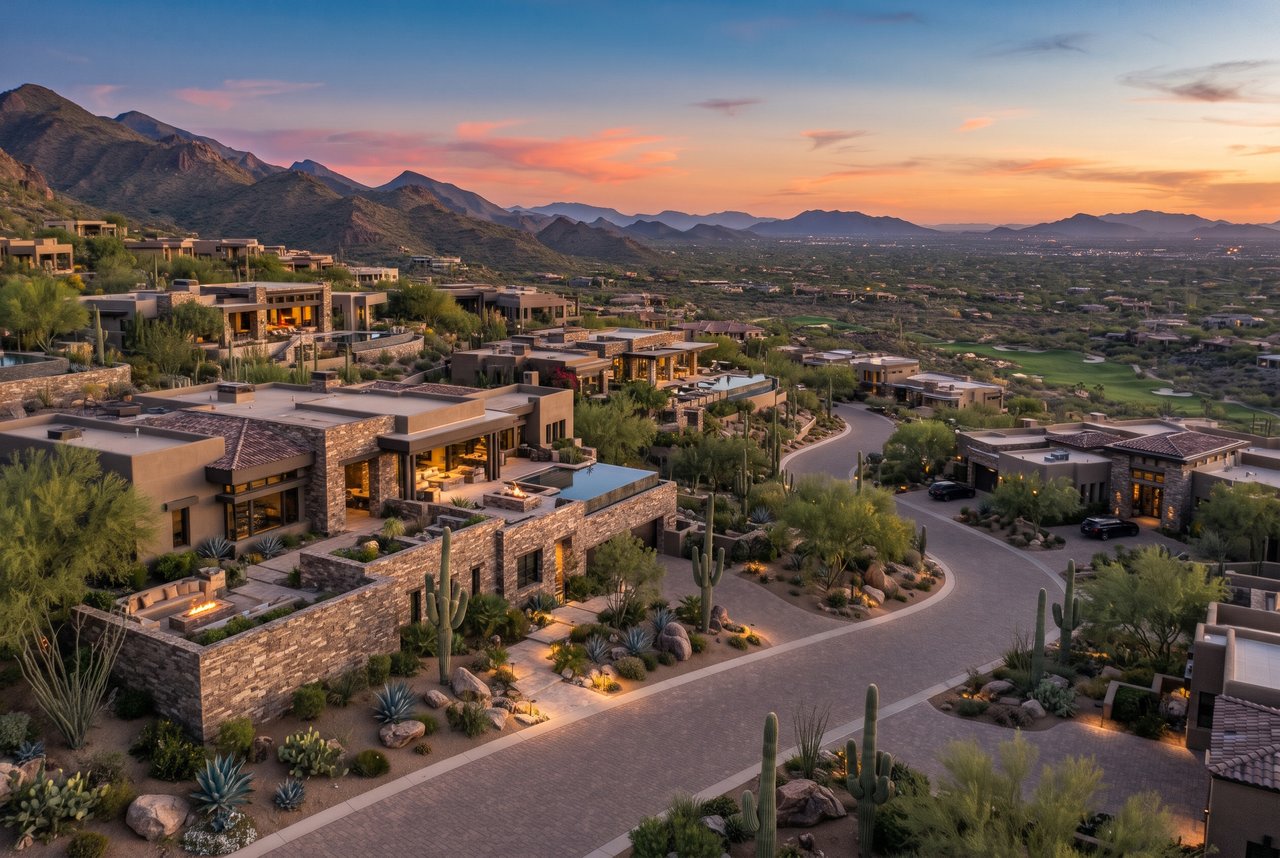
In the realm of luxury real estate, true wealth has always been defined by privacy, exclusivity, and peace of mind. Today, however, the paradigm of high-end estate security is undergoing a dramatic evolution. For discerning homeowners in premier markets like Paradise Valley, North Scottsdale, and the Valley's most secluded hillside enclaves, traditional gates and basic alarm systems are no longer sufficient.
Instead, multi-million dollar estates are embracing a new era of invisible defense and frictionless convenience: the integration of military-grade biometric security, advanced artificial intelligence, and fully automated smart home ecosystems.
Here is a closer look at how modern luxury properties are balancing ultimate seclusion with cutting-edge technological sophistication.
1. Invisible Fortresses: The Rise of Biometric Access Control
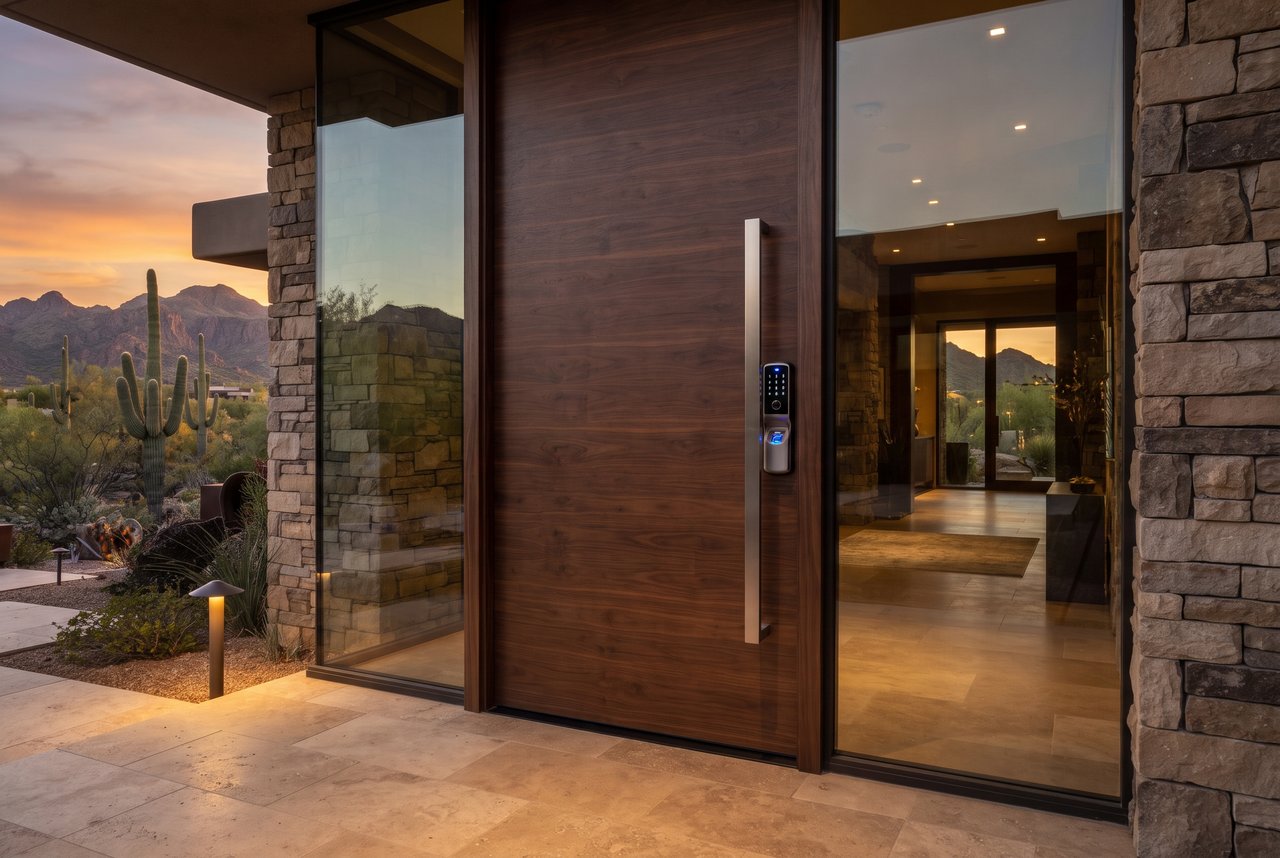
For high-net-worth individuals, celebrities, and executives, discretion and uncompromised access control are paramount. Physical keys and standard security codes are easily compromised; today's elite estates rely on unique biological identifiers.
Facial Recognition and Retinal Scans: Custom-built entry gates and private gallery foyers are increasingly equipped with high-definition facial recognition and infrared biometric scanners. These systems grant seamless, touchless entry to residents and authorized personnel while instantly alerting property managers to unrecognized visitors.
Geofenced Perimeter Defense: Rather than relying on intrusive physical barriers alone, advanced perimeter security uses radar, thermal imaging, and buried seismic sensors. These systems can distinguish between a stray desert animal and a human intruder long before anyone approaches the main structure, triggering quiet alerts to private security details.
2. Autonomous Intelligence: AI-Driven Smart Ecosystems
Modern luxury architecture is designed to anticipate the needs of its residents, operating quietly in the background to manage climate, lighting, and security through centralized artificial intelligence.
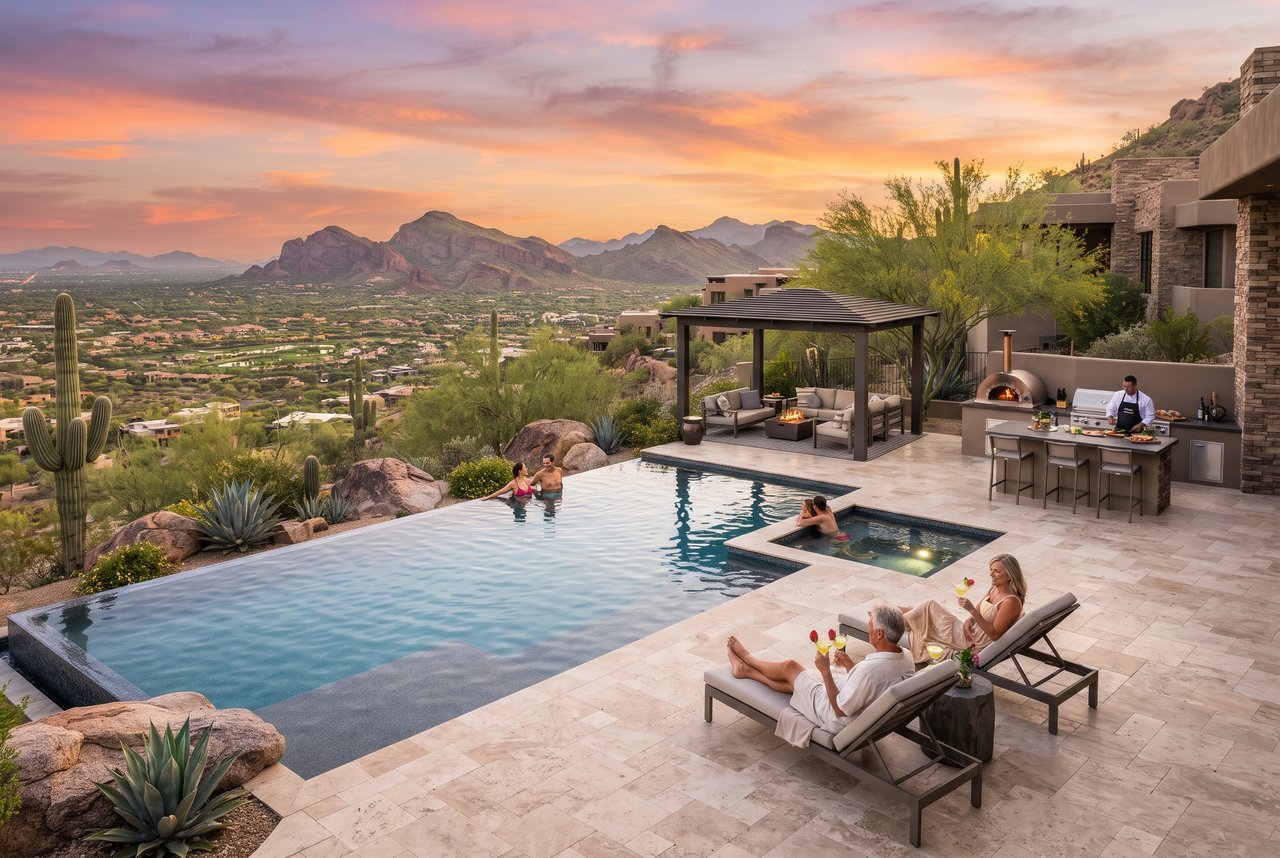
Predictive Environmental Controls: In the desert climate, managing massive glass walls, expansive wine cellars, and smart pools requires precision. Integrated AI learns the daily habits of the household, automatically adjusting solar shades, climate zones, and pool filtration to maximize energy efficiency while maintaining absolute comfort.
Integrated Safe Rooms and Panic Systems: High-end estates frequently feature discreet, reinforced panic rooms equipped with independent air filtration, encrypted satellite communications, and complete override controls for the home’s smart infrastructure—all accessible via encrypted biometric keypads.
3. The Balance Between High-Tech and Low-Profile Luxury
The hallmark of a truly sophisticated smart estate is that the technology remains entirely unobtrusive. High-tech security should never feel like a prison; rather, it should enhance the feeling of an effortless sanctuary.
Architectural Harmony: Smart glass that transitions from crystal clear to opaque at the touch of a button, hidden surveillance lenses flush with natural stone masonry, and subterranean server rooms ensure that technology serves the design rather than cluttering it.
Discreet Staff and Vendor Management: Biometric guest logs allow homeowners to grant temporary, time-restricted access to private chefs, landscapers, and concierge services, ensuring complete accountability without the hassle of physical key handoffs.
The Bottom Line
As technology advances, the definition of a luxury sanctuary is shifting toward intelligent autonomy. For buyers investing in multi-million dollar Arizona estates, combining the natural seclusion of the desert with state-of-the-art biometric security and smart home automation delivers the ultimate combination of safety, luxury, and peace of mind.
If you are looking to explore high-end properties equipped with the finest modern amenities and privacy features in the Valley, let’s connect today.