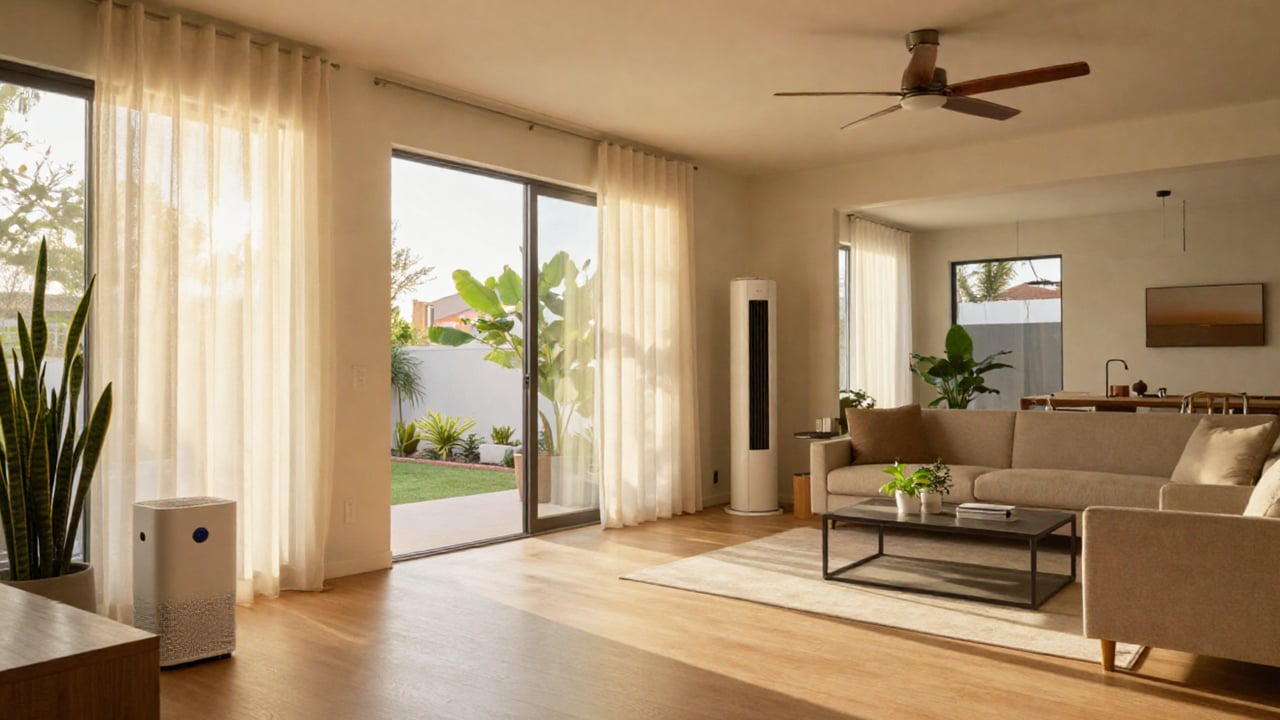
When we think about premium real estate and property value, we often focus on the visible design elements—the custom cabinetry, the marble countertops, or the indoor-outdoor architectural flow. However, true luxury and sophisticated property management depend heavily on the invisible infrastructure of a home.
The quality of the air you breathe inside your residence dictates your daily health, cognitive performance, and ultimate quality of life. According to the EPA, indoor air can be two to five times more polluted than outdoor air. Because our homes are engineered to be tightly sealed, energy-efficient structures, they can easily trap airborne toxins, dust, pet dander, and chemical vapors if not properly managed.
To transform your living space into a true recovery-grade sanctuary, you must actively manage its atmospheric health. Here is a blueprint of smart, high-impact strategies to elevate and maintain pristine indoor air quality.
1. Upgrade to Medical-Grade HVAC Filtration
Your home’s central heating and cooling system acts as the respiratory tract of the property. If you are using standard, low-cost fiberglass filters, you are only protecting the HVAC machinery from large dust clumps—you are not filtering the microscopic particles that compromise your lungs.
-
The Strategy: Transition to a filter with a higher MERV (Minimum Efficiency Reporting Value) rating, specifically aiming for MERV 11 to MERV 13.
-
The Mechanism: High-efficiency filters are densely woven to trap microscopic pollutants. While a standard filter only catches large dust bunnies, a MERV 13 filter captures up to 90% of airborne particles, including bacteria, smoke, pollen, mold spores, and virus carriers.
-
The Maintenance Blueprint: A high-performance filter captures more debris, which means it loads faster. To prevent airflow restriction and maintain mechanical efficiency, replace your filters strictly every 60 to 90 days.
2. Deploy Targeted Source Control: Eradicate VOCs
The most effective way to clean the air is to prevent pollutants from entering the environment in the first place. Volatile Organic Compounds (VOCs) are toxic gases emitted by everyday household items, including synthetic fragrances, harsh chemical cleaners, and low-grade paints or building materials.
-
The Strategy: Conduct an inventory of your household products and systematically transition to low-VOC or zero-VOC alternatives.
-
The Mechanism: Traditional aerosol sprays, chemical air fresheners, and synthetic laundry detergents off-gas chemicals like formaldehyde and benzene directly into your air supply.
-
The Clean Alternative: Eliminate artificial room sprays and plug-in deodorizers completely. Switch to plant-based, fragrance-free cleaning solutions. When remodeling or touching up walls, explicitly specify zero-VOC premium paints and solvent-free adhesives to protect the long-term chemical purity of your home sanctuary.
3. Implement Controlled Mechanical Ventilation
While energy-efficient homes are excellent for lowering utility bills, their tight seals mean the same volume of air is continuously recirculated. To maintain a crisp, clear environment, you must introduce fresh, oxygenated outdoor air while expelling stale indoor air.
-
The Strategy: Utilize structural exhaust fans strategically, or invest in a whole-home energy recovery ventilator (ERV).
-
The Mechanism: Always run your kitchen range hood when cooking—especially if cooking on gas surfaces, which emit harmful nitrogen dioxide. Run bathroom exhaust fans for at least 20 minutes post-shower to eliminate excess moisture that feeds mold growth.
-
The Smart Integration: For a seamless solution, consider integrating an ERV into your central HVAC logistics. These systems continuously exchange stale indoor air for fresh outdoor air while pre-conditioning the incoming air's temperature, ensuring you never sacrifice energy efficiency for purity.
4. Control Particulate Matter at the Threshold
A massive percentage of indoor air pollution doesn't originate inside the house—it is tracked in on the bottoms of shoes and paws. Dust, pesticides, heavy metals, and industrial exhaust residue cling to footwear and quickly settle into carpets, where they become airborne every time someone walks through the room.
-
The Strategy: Establish a strict, non-negotiable "no-shoes" policy at the main entryway and back thresholds.
-
The Mechanism: Pair this policy with high-quality, dual-mat systems: an heavy-duty scraper mat outside the door to catch coarse debris, and a high-pile microfiber mat inside to trap fine dust.
-
The Cleaning Protocol: For pet owners or high-traffic households, vacuum floors at least twice a week using a vacuum cleaner equipped with a certified HEPA filter. Standard vacuums often exhaust fine dust right back into the air; a sealed HEPA vacuum permanently traps 99.97% of particles down to 0.3 microns.
5. Calibrate Indoor Humidity for Baseline Stability
Air that is too humid promotes the rapid proliferation of mold, mildew, and dust mites. Conversely, air that is too dry can irritate respiratory tracts and make the body more susceptible to airborne viruses.
-
The Strategy: Monitor your home's air with a digital hygrometer and maintain relative humidity strictly between 30% and 50%.
-
The Mechanism: In humid climates or summer months, ensure your HVAC system is properly sized to dehumidify the air, or run standalone dehumidifiers in moisture-prone zones like basements. In dry winter months, utilize an ultrasonic humidifier to add clean, targeted moisture to bedrooms.
-
The Long-Term Benefit: Keeping your home within this optimal window creates an inhospitable environment for biological allergens, protecting both your respiratory health and the structural integrity of wood flooring and custom millwork.
The Ultimate Return on Asset Wellness
Optimizing your indoor air quality is an investment in your home's hidden infrastructure. By implementing medical-grade filtration, eliminating chemical off-gassing, and mastering ventilation logistics, you elevate your property from a standard dwelling into a high-performance wellness sanctuary.
When you prioritize the invisible health of your space, you create an environment where your mind can focus, your body can recover, and your family can truly thrive.
Is your home sanctuary running at peak performance? Take the first step this week by upgrading your HVAC filters and reclaiming the purity of your air. 🥂⚓